Skip to Main Content

Crayola Essential Art Supplies for Kids

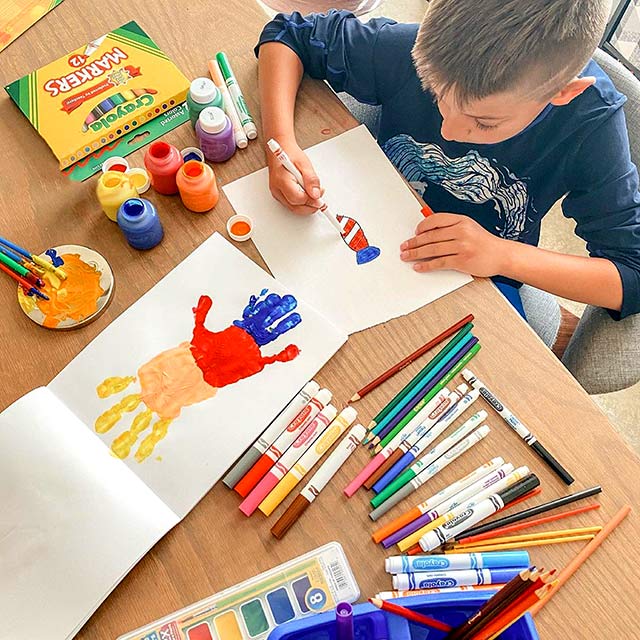
Crayola delivers the art supplies kids need to learn, create, and grow. From crayons and markers to paints and craft kits, our safe, high-quality art essentials make every project colorful and fun. Explore seasonal favorites and new launches designed to inspire creativity for all ages.

The Crayola Difference: Art Supplies Kids Love and Parents Trust

For generations, Crayola has set the standard for kids’ art supplies—combining creativity, safety, and unmatched quality. From crayons with true, brilliant hues and smooth laydown to markers that last longer and revive when needed, every Crayola product is crafted for superior performance, safety, and durability. Our commitment to non-toxic materials, vibrant color, and innovative design ensures that every child’s artistic experience is safe, fun, and educational, because great art starts with great tools!

Collection of our essentials products

Explore Crayola Core Supplies

Tap an icon to discover the tools you love including crayons, markers, colored pencils, and more. Explore each category and spark your next masterpiece.

What’s New & Trending

Discover the latest Crayola favorites—from innovative tools to creative kits and seasonal must-haves. Explore what’s trending and find fresh ways to spark imagination every day.

World’s Favorite Colors

Celebrate color like never before! Explore a unique assortment inspired by the shades people love most around the world.

Learn More

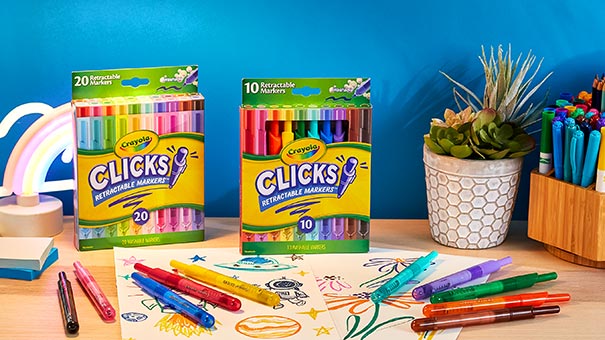
Crayola Clicks

Snap, click, create! These innovative markers keep creativity flowing—no caps to lose and easy cleanup from skin and clothing.

Learn More

Back to School

Refresh your classroom this spring! Discover essential supplies and creative tools that keep teachers, parents, and kids inspired all season long.

Learn More

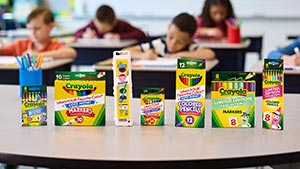
Classroom-Ready Packs

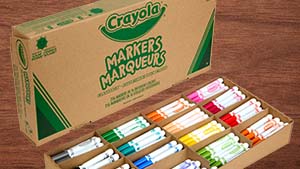
Keep your classroom stocked and ready for every project. Crayola Classpacks have all the colors you need for every student and every project, all in one easy box.

Learn More

Egg-citing Easter Finds

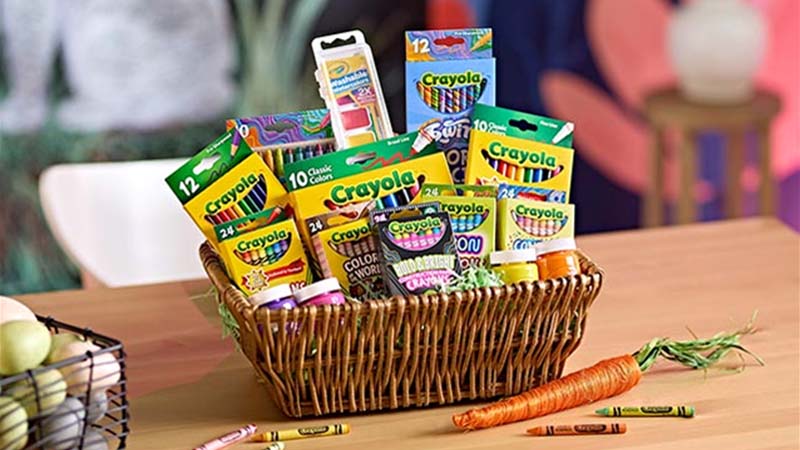
Make every basket a burst of joy! Fill it with Crayola crayons, markers, and creative surprises that kids will love.

Learn More
A creativity kit with crayons, pencils, and markers.

Gift-Ready Art Kits

Create instant “wow!” with all‑in‑one bundles packed with crayons, markers, paints, and creative extras. These ready‑to‑go sets make it easy for kids to jump right into art time—perfect for birthdays, holidays, classroom rewards, or anytime you want to brighten someone’s day.

A collection of essential coloring books.

Surfaces Made for Big Ideas

Give every masterpiece the space it deserves. From sketch pads to specialty paper and themed coloring pages and books, these surfaces are built to bring out the best in every crayon stroke, marker line, and paint swirl.

FAQ

Find answers to common Crayola Supplies questions!

  • Introduced in 1998, Crayola® offers a variety of colored pencil assortments that are the essential creative tool for kids or the art enthusiast. Crayola colored pencils are manufactured in Brazil, Costa Rica or Vietnam due to their high-volume manufacturing capabilities.


    The process of making Crayola Colored Pencils begins in the forest. Seedlings, which are young trees, are planted in fields much like a farmer plants a crop. Seedling crops grow into trees which are eventually used to make wood casings for the pencils. After several years, the trees are harvested, cut into even lengths, stacked onto trucks and shipped to the sawmill. Then, a new crop of seedlings is planted to replace those which have been harvested.


    At the sawmill, lumber arriving by the truckload is stacked in large piles and allowed to dry. Once dry, the lumber is fed into a bark stripping machine which removes all the bark from each piece of lumber. Next, the lumber goes through a series of milling machines which cuts the lumber into rectangular slats. These slats are about as long as a colored pencil and about three inches wide. The slats are the building blocks for the production of colored pencils.


    The slats are then transported to the pencil making plant. Here they are fed into another milling machine which cuts small semicircular grooves at regular intervals down the length of each slat. These grooved slats are now ready to accept a colored pencil core.


    To make a Crayola Colored Pencil core, you need four raw materials:

    1. Extenders - which make up the body of the lead.
    2. Binders - to hold the ingredients together.
    3. Pigment - which gives each type of colored pencil its unique color.
    4. Water – to mix all the ingredients.

    First, the extenders, binders, pigments and water are placed in a large mixer which gently kneads them together into a uniform doughy substance. When the mixing is complete, the contents of the mixer are rolled into flat sheets. Finally, these sheets are machine-pressed into large, long solid cylinder shapes. These shapes are called cartridges.


    Each cartridge, while still damp and pliable, is inserted into another machine called an extrusion press, where it is forced through a small tube. The tube has a diameter equal to that of a colored pencil core. As the long rope of wet colored core comes out, an automatic slicer cuts it into equal lengths approximately as long as a colored pencil. Since the leads are still quite moist, they must be dried in large ovens before they become hard enough to insert into the slats.


    To assemble the pencils, half of the grooved slats are fed into a machine which carefully lays a colored pencil core into each groove. Then a layer of glue is applied, and a second grooved slat is placed on top of the slat holding the lead. Think of this as a pencil sandwich, with each slat acting like a piece of bread and the color cores acting like the filling.


    These pencil sandwiches are then bound very tightly together and placed into storage to give the glue time to dry. Once the glue is dry, they are fed into another milling machine which cuts them into individual colored pencils. Depending on the design of colored pencils, they are cut into either round or hexagonal shapes.


    Next, the pencils are fed into a machine to be painted with the same color paint as the colored core. The pencils run down a conveyor belt to allow the paint to dry. The painted pencils are then sent to a machine to be automatically sharpened.


    Finally, brightly colored finished pencils are packed into boxes, which are shipped to neighborhood stores.


    Crayola Colored Pencils are used by people of all ages for everything from crafts to professional artwork and school projects. Learn more about Crayola Colored Pencils products.
  • Refills are not currently available for Crayola® Twistables products.
  • The basic ingredients contained in Crayola® Crayons are paraffin wax and color pigment. These ingredients are the same for all Crayola Crayon colors, with some modifications in special effects crayons.

    Crayola Crayons begin to melt at around 105° Fahrenheit and have a melting point between 120° - 147° Fahrenheit. The melting point is the same for all regular Crayola Crayons; however, the density and amount of pigment included in different crayons will result in varying thickness or viscosity of the mixture.

  • We value your commitment to recycling products you are no longer using.

    At Crayola, our primary focus is on providing safe, high-quality products. To maintain the standards of safety and performance that our customers expect, we carefully select and screen raw materials for our crayons. Unfortunately, introducing recycled crayon wax into our manufacturing process would compromise these standards.
    Crayola is committed to sustainability and environmental responsibility. To learn more about our efforts to support a greener planet, please visit our Sustainability Page.

  • By definition, acid-free is having a pH of 6.5 to 8.0. Currently, the following Crayola® products meet an "acid-free" definition, having a pH of 6.5 to 8.0:

    * Please note that vendor and product ingredients may change, potentially affecting a product's acid-free status.